A larp wallet comparison that does not just say ours
Every vendor in this category claims pixel-perfect. Almost none of them are compared on the things that decide it once you are recording. Here are the six criteria worth checking, then the side-by-side breakdowns.
The short answer
Judge a larp wallet on six things: whether the screens animate or just sit there, how many taps it takes to reach an unfinished screen, which wallet interfaces it ships, whether the price ladder has a tier that matches your project length, how you pay and how the key arrives, and whether the vendor publishes a responsible-use policy. Price is the easiest to compare and the least useful — every vendor in this category is within a few tens of dollars of the others.
Six criteria that actually separate them
In the order they tend to matter.
1. Does it move?
A static screen survives a screenshot and dies on video. Spring curves, pull-to-refresh, the swap sheet, the notification drop and the balance count-up are what a viewer reads as real, and they are the hardest part of the build. Record ten seconds before you buy anything.
2. How far do the screens go?
Count the taps until you hit something unfinished. A wallet that only holds up on the home tab limits you to one shot. Token detail, activity, receive, the send flow and settings are where a demo either continues or stops.
3. Which interfaces ship
Phantom for Solana content, Trust Wallet for multi-chain, Exodus for portfolio views, Ledger Live for cold-storage angles. Buy the lineup you will actually film — a fourth wallet you never open is not worth a price difference.
4. The shape of the ladder, not the price
A week is right for one project. A month is right for a campaign. An annual tier is right for anyone doing this continuously, and it is the tier most vendors skip — which pushes you into a lifetime key you did not need.
5. Checkout and delivery
Crypto-only checkout means no card processor and no account. Card checkout means an email address and a processor in the loop. Either is fine; what matters is whether the key is issued automatically or waits on someone reading a Telegram message.
6. What the vendor publishes about use
Terms and a privacy policy are the floor. A vendor that also publishes what the product never does, which uses are prohibited, and how to disclose simulated visuals is telling you they expect the product to be used in public. That is the one worth trusting with your content.
Side-by-side breakdowns
Each one is checked against the vendor's live site and dated on the page.
RPWallet vs Larpz Wallet
14 rows, including the 3 Larpz Wallet wins, checked against larpzwallet.app.
Read the comparisonRPWallet vs zlarp
9 rows, including the 1 zlarp wins, checked against zlarp.com.
Read the comparisonRPWallet vs My Larp Wallet
14 rows, including the 4 My Larp Wallet wins, checked against mylarpwallet.com.
Read the comparisonRPWallet vs Larp Wallets
12 rows, including the 2 Larp Wallets wins, checked against larpwallets.com.
Read the comparisonRPWallet vs Larpex
12 rows, including the 4 Larpex wins, checked against larpex.app.
Read the comparisonRPWallet vs LarpLabs
8 rows, including the 2 LarpLabs wins, checked against larplabs.io.
Read the comparisonRPWallet vs Larped
6 rows, including the 1 Larped wins, checked against larped.app.
Read the comparisonRPWallet vs LarpBank
11 rows, including the 4 LarpBank wins, checked against larpbankapp.com.
Read the comparisonChoosing a larp wallet FAQ
What is the best larp wallet?
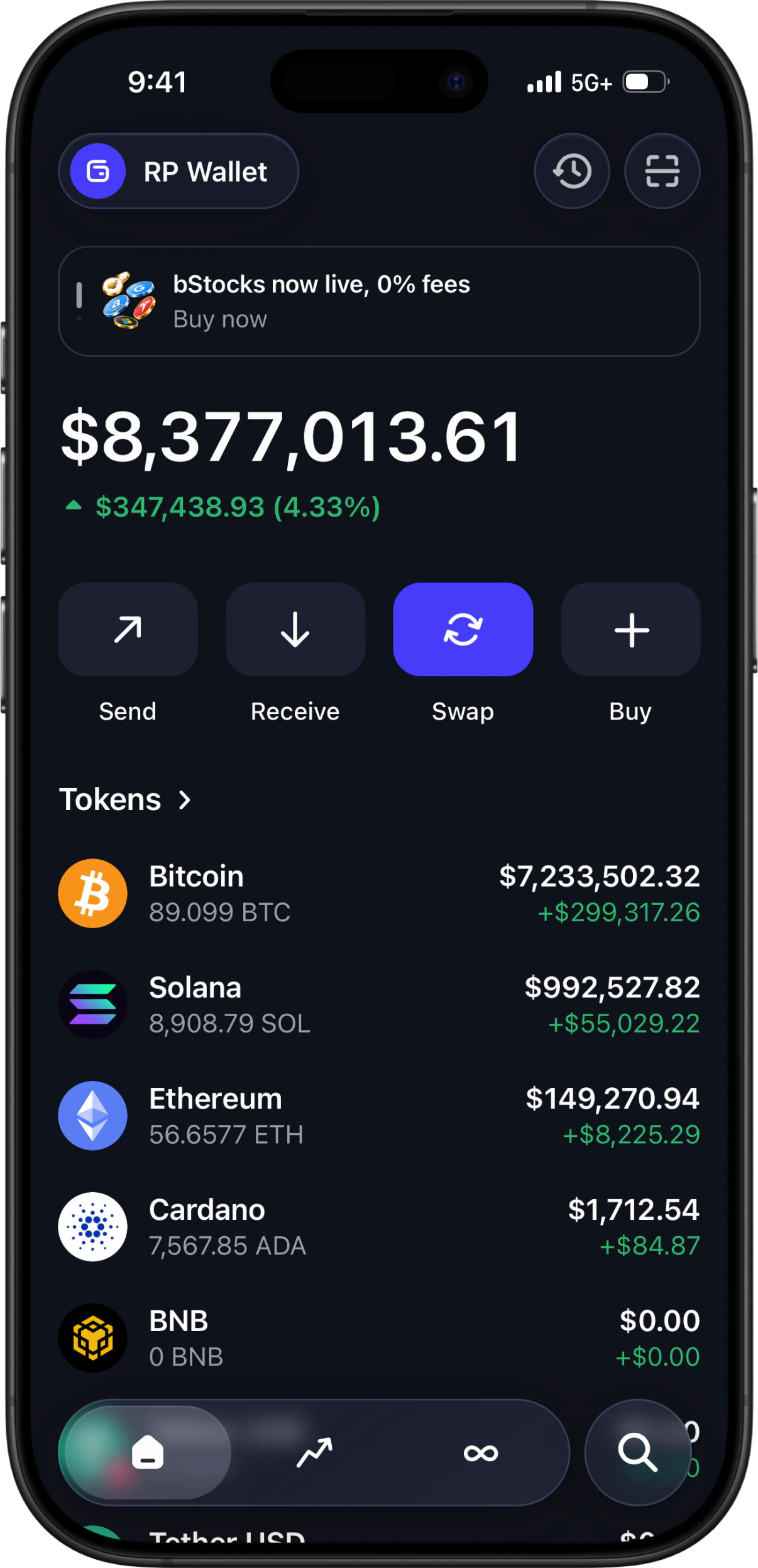
For a recording that follows a simulated swap into Activity, RPWallet includes the Phantom-style app alongside Trust Wallet-, Exodus- and Ledger Live-style simulators. A week starts at $15. You can pay with crypto at checkout or arrange card payment through @RPWalletSupport on Telegram.
Are larp wallets and wallet simulators the same thing?
Yes — the two names describe the same product from different sides. 'Larp wallet' comes from the roleplay and creator side; 'wallet simulator' is what the same tool is called when it is used for product demos, prototyping and pitch material. Both are entertainment and production tools with no blockchain access, no seed phrase and no real funds.
Why is price the least useful way to compare them?
Price is one part of the comparison. RPWallet costs $15 for a week, $39 for a month, $129 for a year, or $299 for lifetime access. Compare those prices alongside the animations, finished screens, and interfaces you need.
How do I check a larp wallet before buying?
Ask for a screen recording rather than screenshots, and watch what happens between screens. Ask which screens are finished beyond the home tab. Check whether the plan lengths match your project. Then read what the vendor publishes about acceptable use — it is the fastest read on whether they expect their product to end up in public content.
Keep reading
Choose a LARP wallet for your shoot
Try a three-shot rehearsal on the prop phone and check what it takes to reset the scene.
Why choose RPWallet for filming?
Follow a simulated swap from the opening balances to the Activity screen, then compare options for your shoot.
LARP Wallet
What a larp wallet is, who uses one, and what the screens actually do.
Phantom Wallet Simulator
Editable balances, custom tokens and simulated transactions on a 1:1 Phantom-style recreation.
Trust Wallet Simulator
Multi-chain wallet screens across Bitcoin, Ethereum, BNB, Solana and more.
Safety & Responsible Use
What RPWallet never does, which uses are prohibited, and how to disclose simulated visuals.
Try the one that moves
Join 800+ people already using RPWallet on iOS and Android. No download, no seed phrase, no real funds.